APV Gaulin & Rannie Homogenizers
Triplex supports APV Gaulin and Rannie homogenizers across production, pilot, laboratory, installed-base, service, and accessory needs — with selection grounded in product behavior, pressure, flow, liquid-end design, feed conditions, and long-term support.
Start with the application, then narrow the model family.
APV Gaulin and Rannie homogenizers cover a wide range of production, pilot, laboratory, and installed-base needs. The useful starting point is the product result: emulsion stability, dispersion quality, particle or droplet-size behavior, texture, cell disruption, uptime, or service support.
Production & Process Homogenizers
APV Gaulin and Rannie production platforms are selected around throughput, pressure, liquid-end design, sanitation, controls, and service access — not a model number alone.
Pilot / scale-upPilot Homogenizers & Scale-Up
The APV Pilot 4T sits between bench development and full production, giving processors a practical way to screen recipes, pressure ranges, and process behavior before committing to plant-scale equipment.
Lab / R&DLaboratory Homogenizers
APV Lab 1000 and Lab 2000 homogenizers support formulation, pressure screening, emulsions, dispersions, and cell disruption work before pilot or production scale-up.
Installed baseInstalled Base & Legacy Homogenizers
Many plants still run older Gaulin and Rannie machines. The useful first step is identifying the nameplate, liquid end, serial number, current symptoms, and parts requirement.
Field service / partsHomogenizer Field Service & OEM Parts
Homogenizer uptime is tied to wear parts, feed conditions, startup/shutdown practices, and liquid-end health. Triplex supports installed APV Gaulin and Rannie equipment with practical service and parts review.
HWRSHomogenizer Water Recycling System
APV's Homogenizer Water Recycling System is built for plants that want to reduce homogenizer cooling/lubrication water use while monitoring water quality and protecting the machine.
Controls / accessoriesHomogenizer PLC Controls & Accessories
Controls, cabinets, dampeners, and accessory packages can materially affect operability, diagnostics, and the working environment around a homogenizer.
A high-pressure homogenizer is a plunger pump plus a precision valve.
The pump supplies pressure. The homogenizing action happens as product moves through the valve gap, where rapid velocity change, pressure drop, turbulence, valve geometry, and impact effects influence the finished result. Premix quality, viscosity, temperature, formulation, pass count, and stage count matter.
Emulsions
Dairy, beverage, sauces, dressings, creams, lotions, and similar products where droplet-size control and stability are important.
Dispersions
Products where solids or active materials need a more uniform distribution in a liquid carrier.
Cell disruption / high-pressure work
Biotech and specialized applications where valve design, pressure range, cooling, and application testing are especially important.
Homogenizer conversations get clearer when the equipment context is visible.
Production, lab, and service needs share a common foundation, but the practical questions change quickly once pressure, flow, testing stage, and installed-base support enter the conversation.
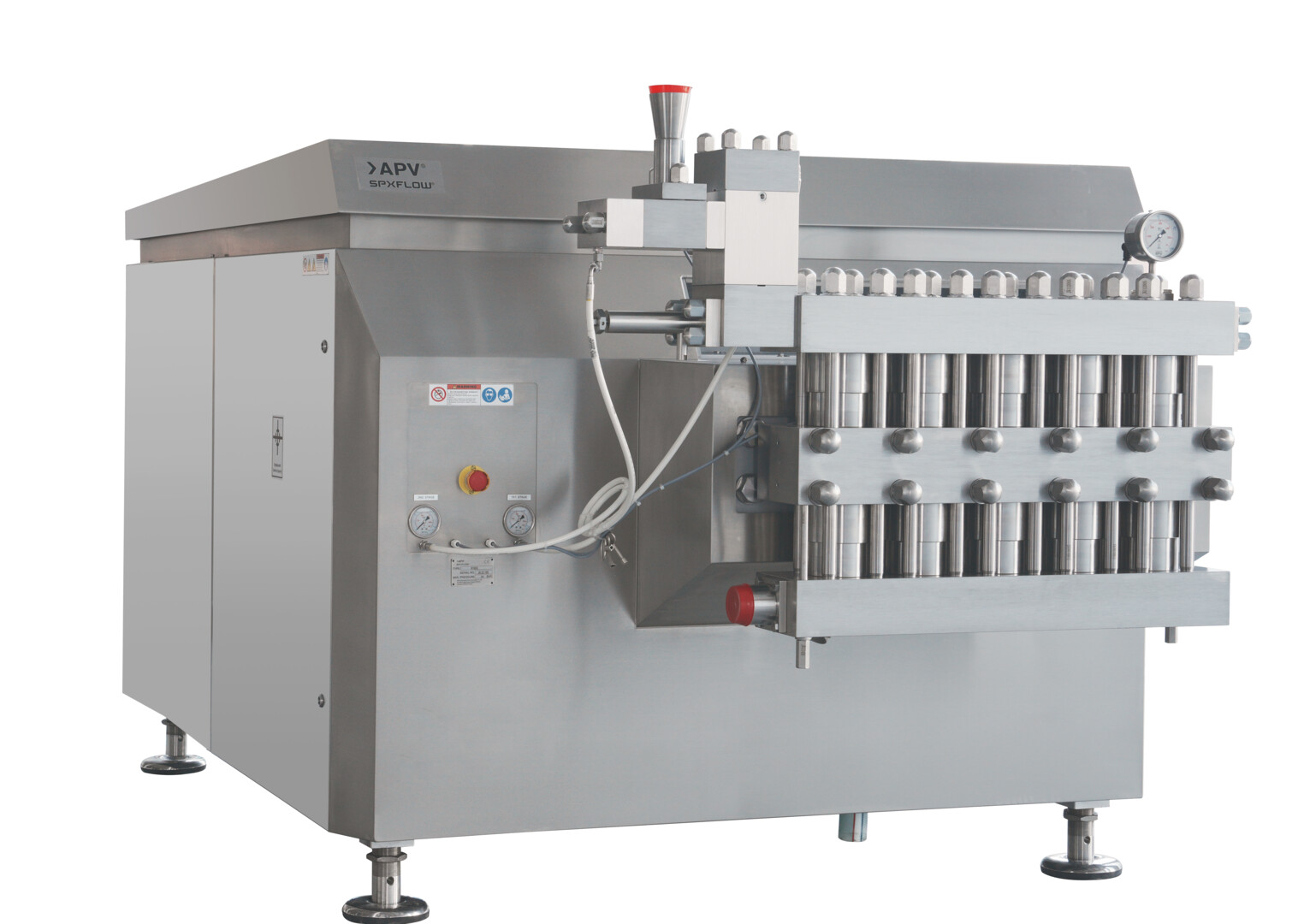
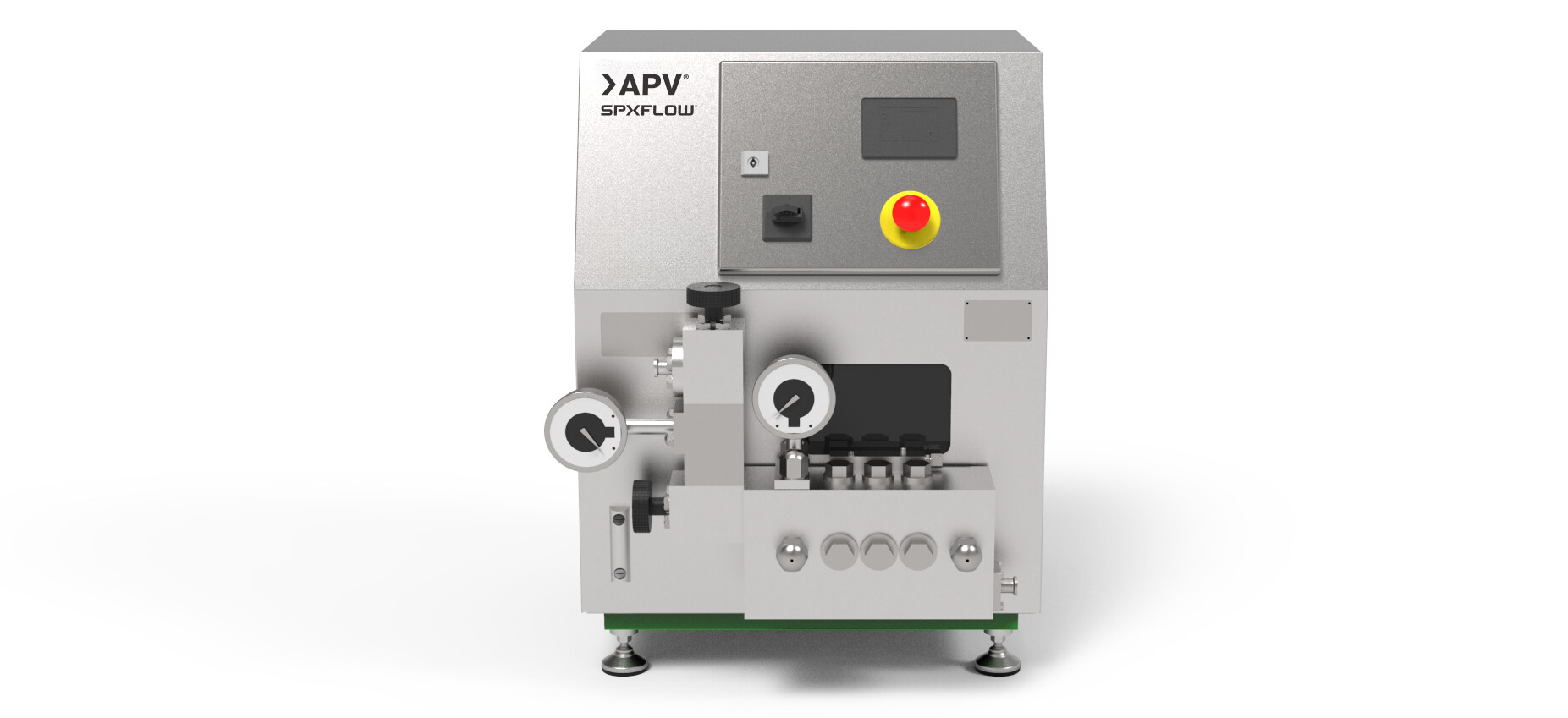

Model families to frame the conversation.
Gaulin and Rannie names matter because liquid-end design, pressure range, maintenance approach, and application fit are not interchangeable.
| Need | Likely APV family | What to review |
|---|---|---|
| Lab / R&D | APV-1000, APV-2000 | Sample size, pressure screening, product target, pass count, scale-up path. |
| Pilot / scale-up | Pilot 4T | Batch vs continuous operation, pressure/flow combination, cleaning, future production target. |
| Low/medium pressure dairy & beverage | EQ 37T / EQ 75T | Flow rate, pressure, product type, sanitation, manual/automatic operation. |
| Production | Gaulin/Rannie T series | 3-plunger production frames, liquid end, valve, materials, controls, service plan. |
| Higher capacity / smoother flow | Q series | 5-plunger larger-capacity platforms, pulsation, noise, controls, utilities. |
| Installed base | Legacy Gaulin/Rannie | Nameplate, serial number, liquid end, symptoms, parts list, support availability. |
Feed conditions are part of homogenizer performance.
A homogenizer can only operate as well as the product feeding it. Inlet pressure, air entrainment, feed-pump behavior, viscosity, and suction piping should be reviewed early — especially on older installations or high-duty production lines.
Why does inlet pressure matter?
The plunger pump needs a consistent, air-free feed. Starved suction can show up as pressure instability, noise, vibration, accelerated wear, or damaged liquid-end components.
Do pulsation dampeners fix cavitation?
No. Dampeners reduce piping vibration and pressure pulsation. They do not correct air entrainment, poor suction piping, inadequate overfeed, or inlet starvation.
When does a PD feed pump need extra review?
Positive-displacement feed pumps often need bypass or constant-pressure control so the homogenizer receives steady feed without fighting the upstream pump.
What should be checked before startup or service?
Confirm product supply, inlet pressure behavior, air removal, pressure application sequence, cleaning method, and the condition of valves, seats, plungers, packings, and gauges.
Brochures, videos, and source material.
Brochures and data sheets belong in the Triplex brochure center. Manuals and reference documents stay in the manuals center.
Rannie and Gaulin homogenizer animation
Visual explanation of the main APV homogenizer components and operating principle.
APV lab homogenizer troubleshooting
Reference for APV-1000/APV-2000 operation, pressure behavior, and common lab-unit symptoms.
Download the homogenizer preventive-maintenance guide.
Use the Triplex PM guide to frame daily checks, liquid-end inspection, run-hour service planning, and pressure-symptom review for APV Gaulin and Rannie homogenizers.
Need help narrowing the right path?
Send product, target result, temperature, viscosity, flow rate, pressure range, sanitation requirements, current equipment, and whether this is lab, pilot, production, parts, or service.
Talk to Triplex